Time to read: 4 minutes
🏡 In this reflection:
“Group homes” do not feel like homes. That matters.
Environment shapes whether someone is coping… or growing.
For profoundly autistic adults, nervous system safety is essential.
A true home creates the conditions for openness, not compliance.
HomeLife 21 is building toward a new standard: care that feels like home.
When something doesn’t feel right
Let us describe a moment many families experience,
even if they don’t have words for it.
You walk into a place that is called a “group home,” and something in you tightens. Even if everything may be technically correct, you sense something is... Oh, I don’t know. The staff seems kind enough. The rooms are clean. The schedule is organized.
And yet—
There are signs on the walls.
Charts.
Clipboards.
People standing. Voices moving in and out on shifts. The rhythm of the place never quite settles. You can feel it in your body before you can explain it:
This is a system.
This is not a home.
Environment shapes what becomes possible
For families of profoundly autistic adults, that distinction matters more than most people realize. Because our environment is not just the backdrop to our lives. Environment shapes everything.
How someone eats.
How they connect.
How they rest.
How they move through a room. How they move through life.
Whether they feel safe enough to try something new.
Whether their world expands… or quietly narrows.
For many profoundly autistic individuals, the nervous system is not filtering the world in the same way most environments assume. Sensory input can arrive all at once, without hierarchy. Sound, light, movement, expectation; each concurrent ping demanding equal attention. What may feel neutral or manageable to others can easily become overwhelming, even disorienting and distressing.
In those conditions, energy is spent coping, not growing.
But when an environment softens, when it becomes predictable, attuned, and steady, the nervous system can begin to settle.
A soothing rhythm begins to take shape. And from that place, something essential becomes possible: engagement without distress, and growth without compulsion.
This is what HomeLife 21 is building toward. A true home environment for profoundly autistic adults, beginning with four young men, and expanding into a new standard of care.
What a true home makes possible
A true home has no need to announce itself. It doesn’t rely on signage or clipboards to hold it together.
It lives and breathes in small moments.
A kitchen where dinner unfolds at its own pace.
Not rushed. Not optimized. Just shared.
A table that people return to. Not because they are told what time to do so, but because that’s where life naturally gathers.
A true home has walls that hold art, not instructions.
A living room that softens the edges.
Cozy spaces that invite someone to sit. Or play.
Or simply be seen, heard, and known.
The same people, day after day, creating a rhythm that becomes familiar enough to trust.
Of course, care still exists here.
The systems that support health and safety—medication, documentation, oversight—are present, as they must be.
But they do not define the space.
They are held discreetly, integrated quietly, so that what is most visible, what is most felt, is dignity, not monitoring.
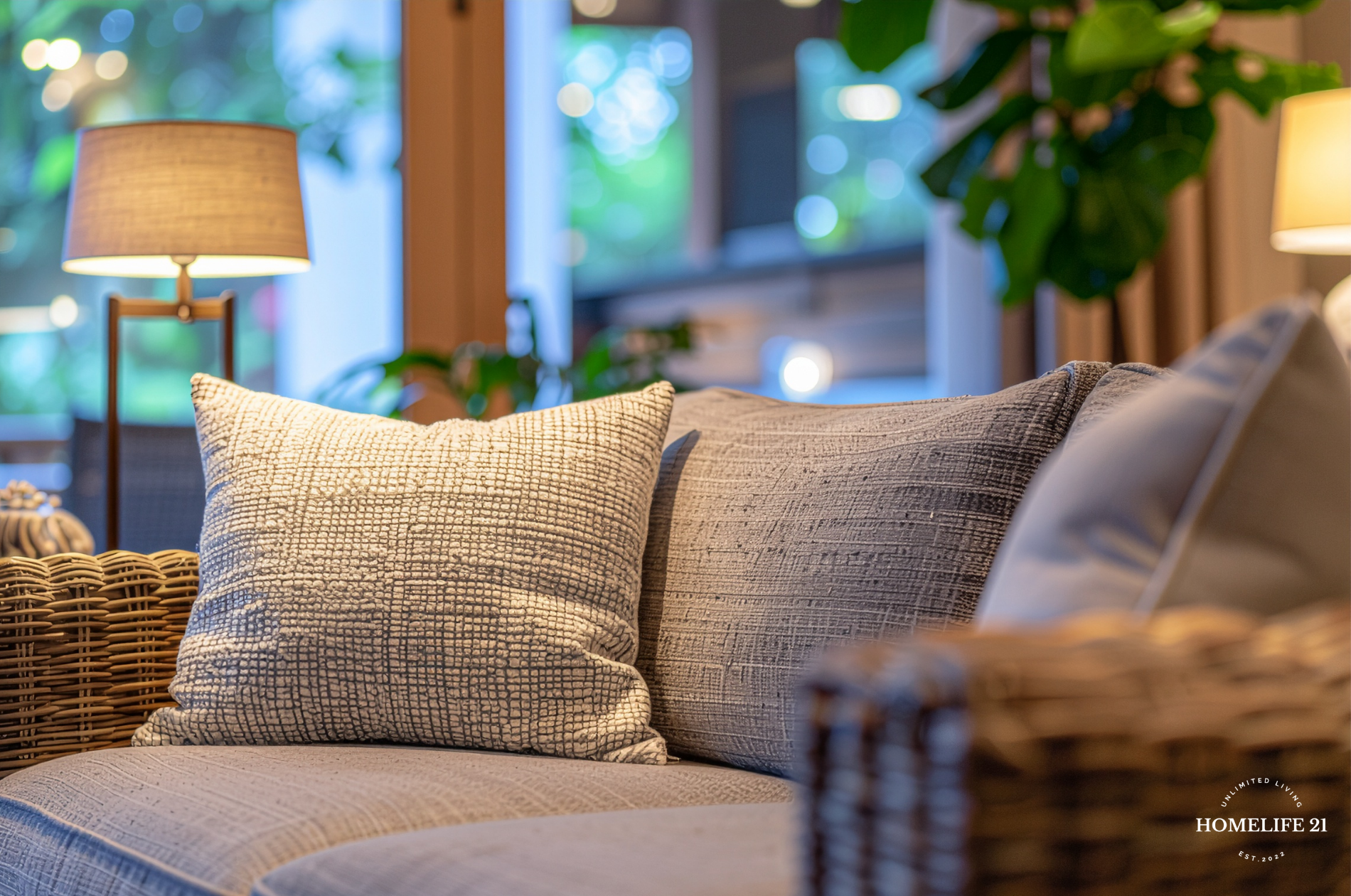
A living room that pillows the soul
In a true home, time stretches.
There is room for curiosity. There is space for people to participate slowly.
To stir.
To pour.
To watch.
To be included without needing to keep up.
A true home is about more than comfort.
It’s about what becomes possible when the environment no longer demands attention, adaptation, and compliance at every turn. When someone isn’t expected to adjust themselves to the system around them, something else begins to happen. Something so subtle a system might miss it. But a family never would.
They begin to open.
We’ve seen what happens when it shifts
We see glimpses of this openness in moments of ease, when the world settles around us—and within us.
In familiar spaces and faces.
In gentle, predictable, steady rhythms.
In environments where the nervous system is no longer in a state of bracing. Where no one is on high alert. Where one can simply be.
A new food is tried.
A longer gaze is held.
A small step forward appears where none existed before.
Not because a new ability suddenly appeared, but because the environment cultivated it.
Because a true home created safety and held the space for it.
This is what we are building. Not a program that takes place in a house. Not a smaller version of a residential facility.
But a true home.
One where care exists, but does not dominate. Where support is present, but not intrusive. Where life is shared, not just managed.
Because our sons are not problems to be solved. They are dynamic people whose lives can continue to unfold—if the environment is designed to allow it.
The question underneath everything
There will be many ways to describe what HomeLife 21 becomes over time.
Plans will be drawn.
Partnerships will form.
A property will eventually take shape.
But underneath all of that, this core question remains:
Does it feel like a home?
Because when it does, everything changes.
Not all at once. But steadily. Quietly. In ways that matter.
And for families like ours, that difference is everything.
🏡
